
ALABAMA DEPARTMENT OF MENTAL HEALTH MARKS
NATIONAL OPIOID AWARENESS DAY ACROSS ALABAMA

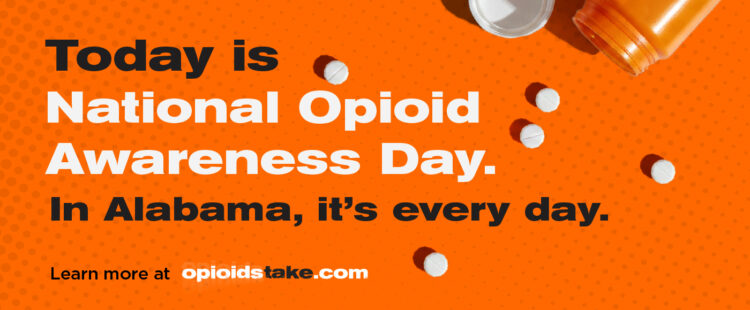
Montgomery, AL – The Alabama Department of Mental Health (ADMH), through the Opioids Take initiative and with funding from the Alabama Legislature, is bringing statewide attention to National Opioid Awareness Day on September 21. While the annual observance creates an important moment to reflect, learn, and take action, this year’s message emphasizes that addressing the opioid crisis requires a commitment that extends beyond a single day: “Today is National Opioid Awareness Day. In Alabama, it’s every day.”
“In Alabama, we are committed to increasing awareness through continued education, prevention, treatment and recovery supports. As we celebrate National Opioid Awareness Day today and every day, we are encouraged by the progress made to expand access to care, support individuals and families, decrease overdoses, and save lives,” said Commissioner Kimberly Boswell, Alabama Department of Mental Health.
Opioid misuse remains a serious public health concern, with fentanyl and other synthetic opioids contributing significantly to overdose risk in Alabama. However, the state is making meaningful progress. According to provisional data from the Centers for Disease Control and Prevention, there was a 46% decrease in substance-related overdose deaths in Alabama between March 2024 to March 2026.
Since 2019, more than 222,000 naloxone kits have been distributed throughout the state, helping make lifesaving overdose-reversal medication more accessible in Alabama communities. Visitors to www.opioidstake.com/naloxone can find coupons and available locations to purchase naloxone.
Progress comes amid coordinated efforts by the Alabama Opioid Overdose and Addiction Council, the Oversight Commission on Alabama Opioid Settlement Funds, state agencies, community providers, and partners throughout Alabama. Continued prevention, treatment and recovery efforts remain essential to saving lives and helping individuals and families affected by fentanyl, synthetic opioids, and opioid misuse.
Representative Rex Reynolds (HD21), chair of the Oversight Commission on Alabama Opioid Settlement Funds, said, “While the height of the opioid epidemic is thankfully behind our state, its devastating impacts are still being felt across all of Alabama’s 67 counties. Through a strong partnership between the Alabama Legislature, the Department of Mental Health, and the Oversight Commission on Opioid Settlement Funds, our state has successfully invested over $34 million in prevention, treatment, and recovery efforts that are saving lives. National Opioid Awareness Day serves as a powerful reminder that while we should be proud of the progress we have made, our work is far from over.”
Efforts surrounding National Opioid Awareness Day include digital billboards across 182 locations statewide, amplified messaging across social media, and a homepage takeover on OpioidsTake.com. The website remains a central hub where individuals can learn about the dangers and risks associated with opioids, explore alternative pain-management strategies, and find treatment and recovery resources.
OpioidsTake.com is an ongoing initiative, funded through Opioid Settlement Funds, which highlights how opioids can take health, relationships, opportunities, and lives, while also sharing stories of help, hope and healing. National Opioid Awareness Day is one part of the initiative’s continued work to educate communities, encourage prevention and connect Alabamians with support.
Summary
Alabama is making progress in addressing the opioid crisis, but the work continues every day. Through prevention, education, access to naloxone, treatment and recovery support, ADMH and its partners remain committed to saving lives and helping individuals, families and communities across the state.
For more information, visit www.OpioidsTake.com. To find a community provider, please visit https://mh.alabama.gov/providers-search/.
About the Alabama Department of Mental Health
The Alabama Department of Mental Health (ADMH) is committed to improving the health and well-being of every Alabamian by providing accessible, high-quality mental health and substance use services. ADMH works to ensure that individuals affected by mental illness, developmental disabilities, and substance use disorders can live with dignity, purpose, and hope in their communities.
###