Public Information inquiries may be directed to 334-242-3417 or emailed to publicinformation.dmh@mh.alabama.gov.

To be added to the Press Release Distribution List, email publicinformation.dmh@mh.alabama.gov with your email.

Below you will find press releases issued by the department and news articles about ADMH or related to mental health.


ALABAMA DEPARTMENT OF MENTAL HEALTH RECOGNIZES NATIONAL OPIOID AWARENESS DAY THROUGH STATEWIDE EFFORT Montgomery, Ala. — The Alabama Department of Mental Health (ADMH),
DIRECT SUPPORT PROFESSIONAL RECOGNITION WEEK Celebrating Care, Support, Commitment Montgomery, AL. – The Alabama Department of Mental Health (ADMH) proudly
NATIONAL RECOVERY MONTH Recovery is REAL (Restoring Every Aspect of Life)  Montgomery, Ala. – The Alabama Department of Mental Health
SUICIDE PREVENTION MONTH Together in Strength, Dignity, Hope, and Purpose Montgomery, Ala. – This September throughout Suicide Prevetion Month, the Alabama
Montgomery, Ala. – The Alabama Department of Mental Health (ADMH) proudly celebrates the third anniversary of the 988 Suicide &
Strike Out Stigma logo
STRIKE OUT STIGMA BASEBALL NIGHT Connection, Resources, and Support Montgomery, Ala. – The Alabama Department of Mental Health (ADMH), River
MENTAL HEALTH AWARENESS MONTH Montgomery, Ala. – Each May, the Alabama Department of Mental Health (ADMH) joins individuals and organizations
The Capitol Art Showcase 20 Years of Art and Advocacy Mark Hembd – Lavender Garden Montgomery, Ala. – In coordination
AUTISM ACCEPTANCE MONTH Awareness, Acceptance, and Support for Autism Spectrum Disorder  Montgomery, Ala. – This April, the Alabama Department of Mental
ADMH Recognizes National Opioid Awareness Day through Statewide Effort

ALABAMA DEPARTMENT OF MENTAL HEALTH RECOGNIZES
NATIONAL OPIOID AWARENESS DAY THROUGH STATEWIDE EFFORT

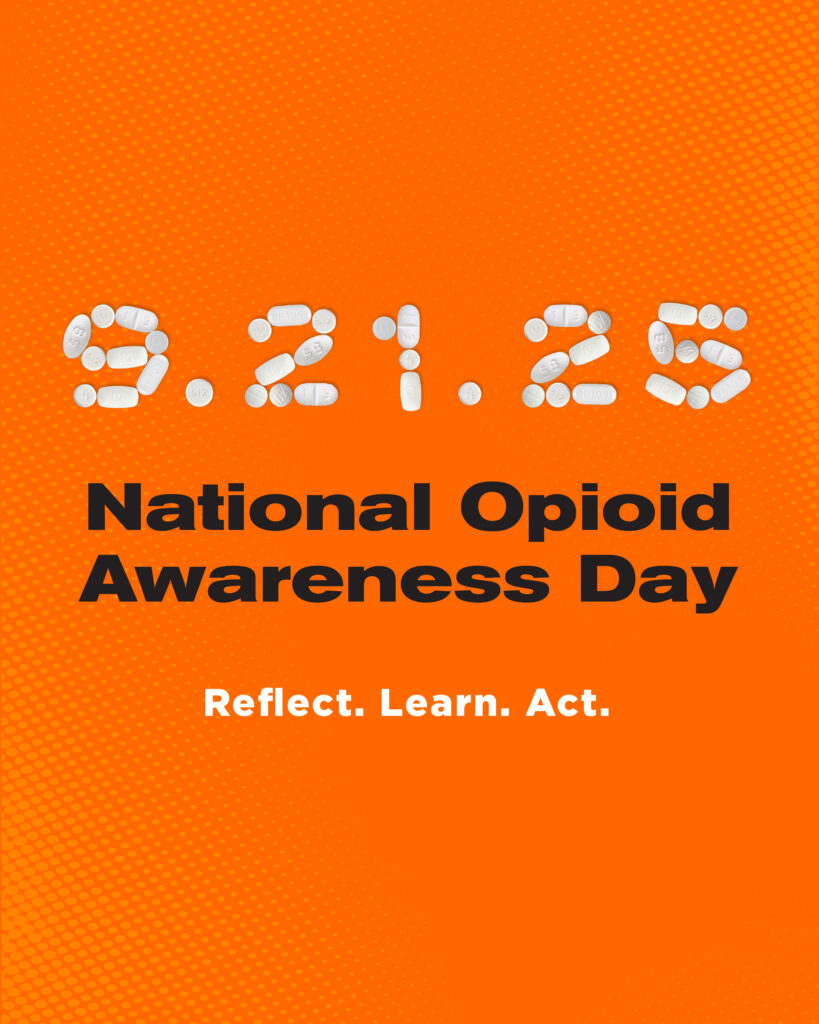
Montgomery, Ala. — The Alabama Department of Mental Health (ADMH), in partnership with Opioids Take and funded by the Alabama Legislature, is bringing statewide attention to National Opioid Awareness Day on September 21. This annual observance calls on Alabamians to reflect, learn, and take action against the opioid crisis, as communities across the country come together to recognize this day.

One of the most pressing public health challenges in Alabama continues to be opioid misuse. National Opioid Awareness Day provides an opportunity to reaffirm the state’s commitment to saving lives and supporting families through compassion and education. Thanks to the efforts of the Oversight Commission on Alabama Opioid Settlement Funds, state agencies, and dedicated community providers and partners, overdose deaths in Alabama saw a more than 30% reduction from 2024 to 2025, according to provisional data from the Centers for Disease Control and Prevention (CDC).

Key efforts for National Opioid Awareness Day include numerous outdoor billboards across Alabama, amplification across social platforms, and dedicated resources at OpioidsTake.com, a central hub where individuals can learn more about opioids, alternative pain management strategies, and treatment options.

OpioidsTake.com is an ongoing state-funded initiative that highlights how opioids can take health, relationships, opportunities, and lives – while also showcasing the stories of recovery and hope. The initiative is designed to reduce stigma, expand access to information, and engage communities across Alabama in prevention and recovery. The observance of National Opioid Awareness Day is just one of the many ways this effort is working to drive change across Alabama.


Summary:
Opioid misuse continues to affect families and communities across Alabama. By observing National Opioid Awareness Day, ADMH and its partners reaffirm their commitment to saving lives and supporting families through prevention, treatment, and recovery. For more information, please visit www.OpioidsTake.com.

About the Alabama Department of Mental Health
The Alabama Department of Mental Health (ADMH) is committed to improving the health and well-being of every Alabamian by providing accessible, high-quality mental health and substance use services. ADMH works to ensure that individuals affected by mental illness, developmental disabilities, and substance use disorders can live with dignity, purpose, and hope in their communities.

Direct Support Professional Recognition Week 2025

DIRECT SUPPORT PROFESSIONAL RECOGNITION WEEK

Celebrating Care, Support, Commitment

Montgomery, AL. – The Alabama Department of Mental Health (ADMH) proudly observes Direct Support Professional (DSP) Recognition Week, September 7–13, 2025, honoring the vital contributions of DSPs across the state.

“Direct Support Professionals are at the heart of care for individuals with intellectual and developmental disabilities,” said ADMH Commissioner, Kimberly Boswell. “Their commitment ensures individuals receive the support and respect they deserve. We rely on their skills and compassion every day and celebrate their dedication.”

Direct Support Professionals play an essential role in helping individuals to pursue meaningful and fulfilling lives. Their dedication, expertise, and compassion form the backbone of the quality care provided to thousands of individuals across the state.

Alabama Direct Support Professionals describe their work as deeply purposeful and life changing:

“Seeing the difference that patience, compassion, and support can make in someone’s daily experience motivated me to pursue a role where I could provide that care firsthand. Whether it’s assisting with daily tasks or simply being a source of encouragement. I find purpose in making a positive impact on the lives of individuals with developmental disabilities.”

– Terri Foster

“Growing up with a brother who required outside support, I saw firsthand how vital compassionate skilled care can be. That experience inspired me to become a DSP and has driven my lifelong commitment to help others.”

-Valeria Kelly

Additional testimonials from Direct Support Professionals working right here in Alabama are available here.

During DSP Recognition Week, ADMH encourages all staff, families, and community members to join in celebrating the invaluable work of these professionals who make a meaningful difference in the lives of those we serve.

For additional information about Direct Support Professional Recognition Week, visit https://www.ancor.org/event/direct-support-professional-recognition-week-2025/.

National Recovery Month 2025

NATIONAL RECOVERY MONTH

Recovery is REAL (Restoring Every Aspect of Life)

 Montgomery, Ala. – The Alabama Department of Mental Health (ADMH) joins community partners around the state in commemorating National Recovery Month in September.

Observed annually, National Recovery Month celebrates the resilience of individuals in recovery, promotes awareness about substance use disorders, and recognizes the essential role that treatment and support services play in cultivating healthy communities.

This year’s theme – “Recovery is REAL (Restoring Every Aspect of Life)” – highlights the importance of adopting a holistic approach to recovery that emphasizes all parts of an individual’s life.

“This year’s theme underscores that true healing includes restoring purpose, health and connections,” said ADMH Commissioner Kimberly Boswell. “Our department is committed to supporting every person in building a full, meaningful life in recovery.”

National Recovery Month holds personal significance for Julie Ball, who has been in recovery since 2019 and works as a peer coordinator. “I believe recovery is possible for anyone, and I aim to use my journey to inspire hope and guide others toward healthier, safe and stable lives,” she said.

For Stan Whitfield, the road to recovery began when he was serving time. “While in prison, being told when to sleep and eat, something changed,” he said. “I found out about the SAP (Alabama Department of Corrections Substance Abuse Program) program, where I could learn how to start my road to recovery while still incarcerated… That night, I got on my knees and prayed to Jesus, asking Him to change me, make me new and forgive me for my past transgressions.” After a four-week wait, Whitfield learned that he was among those admitted into SAP.

“A guard came in to read the names of inmates accepted into the SAP program, and the very last name he called was mine,” he said. “Jesus did His part, so it was my turn to keep my end of the deal by showing up and completing the program.”

Today, Whitfield is a helpline coordinator with R.O.S.S. (Recovery Organization of Support Specialists), a peer-led recovery program in Birmingham – a job that he said gives him a sense of purpose.  “Now, I’m on the frontlines helping the unfortunate battle addiction and willing to help anyone get on their road to recovery,” he said.

Read Julie Ball’s and Stan Whitfield’s complete stories here.

As part of Recovery Month, recovery organizations and the Treatment and Recovery Committee of the Alabama Opioid Overdose and Addiction Council, in partnership with community colleges are launching Recovery Is Here — a powerful statewide campaign mobilizing action, awareness, and support around substance use disorder (SUD). Get the full calendar of events and information at www.recoveryishere.info.

the ADMH Office of Substance Use Treatment Services will sponsor a September 10th Information Fair in Tuskegee, with no-cost Narcan kits and more than 20 substance use, recovery support partners. The event will begin at 10 a.m. at the Tuskegee Municipal Complex at 101 Fonville St.

Information shared throughout September will focus on vital aspects of treatment and recovery – building blocks that every individual needs to live a healthy, happy, independent life.  For help, please call the 988 Lifeline or download the Connect Alabama app, a behavioral health finder that provides instant access to education and information, along with other services. Visit www.mh.alabama.gov for more information.

SUICIDE PREVENTION MONTH – Together in Strength, Dignity, Hope, and Purpose

SUICIDE PREVENTION MONTH
Together in Strength, Dignity, Hope, and Purpose

Montgomery, Ala. – This September throughout Suicide Prevetion Month, the Alabama Department of Mental Health and statewide partners unite in Strength, Dignity, Hope, and Purpose to save lives—raising awareness of suicide risk, promoting evidence-based care, and sharing messages of hope and resilience.

The most direct way to access help in a suicidal crisis is to contact the 988 Suicide and Crisis Lifeline, an immediate connection to compassionate and accessible care. Since July 2022, more than 132,000 Alabamians have contacted 988 in moments of crisis. 988 has become an integral part of the state’s mental health response.

“Every day, ADMH is building a stronger, more connected system of care, with a mission to save lives in our state. The Alabama System of Care ensures individuals in crisis have immediate access to help and that no one in a community is left behind,” said Commissioner Kimberly Boswell.

Through the Alabama Crisis System of Care, resources like regional crisis centers and mobile crisis teams bring help closer to home.

Reaching people where they are does not only mean having access to services, but it also means sparking conversations in communities. This September, Project Zero Suicide, facilitated by VitAL, presents town hall meetings in Marion, Winston, Cullman, and Clay counties. These events create safe spaces to discuss mental health, teach suicide warning signs, and can offer Applied Suicide Intervention Skills Training (ASIST)—a two-day, evidence-based course on responding to suicidal ideation.

Another provider initiative is “R U OK? Day,” led by the Council on Substance Abuse (COSA). The campaign encourages people to reach out, check in, and talk to each other to help navigate difficult times. It’s a simple reminder that asking someone “Are you okay?” can be the first step in saving a life.

Throughout Suicide Prevention Month, ADMH urges all Alabamians to foster a culture of openness and support. By initiating conversations and sharing information, everyone can have a role in the prevention of suicide. For more information, contact the Office of Public Information at publicinformation.dmh@mh.alabama.gov.

Montgomery, Ala. – The Alabama Department of Mental Health (ADMH) proudly celebrates the third anniversary of the 988 Suicide & Crisis Lifeline, a vital resource that has transformed how individuals across the state access mental health care in moments of crisis. Since its launch on July 16, 2022, the 988 Suicide and Crisis Lifeline has become a critical entry point for Alabamians seeking immediate help, connecting them to local crisis services through calls, texts, and chats.

Alabama has made remarkable strides in building a statewide system of care that helps individuals in need and 988 is a vital component.

  • Since 2022, a total of 132,713 contacts have been received by crisis counselors.
  • In June 2025, the in-state answer rate reached 87.9%; up from 64% in July 2022.
  • The average speed to answer is currently just 23 seconds. Every second sooner that a crisis is addressed, can mean a life saved.

“988 is more than a phone number. It is a lifeline for Alabamians,” said ADMH Commissioner Kimberly Boswell. “We know 988 saves lives. Giving people a direct way to access care is one of the most important things we can do for the citizens of Alabama.”

Across the state, 988 works with local providers to ensure individuals are not just assisted in a crisis but are connected to local resources.

What began as a simple three-digit number has transformed into a comprehensive infrastructure that includes crisis centers, mobile response teams, and partnerships and understanding between individuals, families, organizations and law enforcement.

The 988 Suicide & Crisis Lifeline is integrated into the crisis centers in Alabama. Alabama has opened six regional crisis centers, each designed to serve as a safe, stabilizing alternative to emergency rooms for those experiencing mental health, suicidal or substance use crises. Additionally, mobile crisis teams have expanded, sending trained professionals directly to individuals experiencing mental health emergencies in community settings.

“988 offers another day of life and a chance for recovery. We are thankful for the Lifeline and its success in helping to save the lives of Alabamians every day,” said Commissioner Boswell.

For more information on 988 and crisis services in Alabama, please visit https://mh.alabama.gov/988-2/.


###


Strike Out Stigma Baseball Night – Connection, Resources and Support

STRIKE OUT STIGMA BASEBALL NIGHT

Connection, Resources, and Support

Strike Out Stigma logo

Montgomery, Ala. – The Alabama Department of Mental Health (ADMH), River Region community partners, and the Montgomery Biscuits are stepping up to the plate once again for Strike Out Stigma Night, an annual event with a goal of increasing awareness around mental illness, substance use disorders, and co-occurring conditions.

Join us on Friday, May 16, at 6:35 p.m. at Riverwalk Stadium for a night of baseball, connection, and conversation. Visitors can stop by provider booths and resource tables offering support and links to services for individuals and families navigating mental health and substance use challenges.

Mental illness and substance use disorders are experienced by more than 930,000 Alabamians annually (Mental Health America, 2024). Despite the prevalence, stigma continues to be one of the biggest barriers to seeking help. Strike Out Stigma Night is an opportunity to connect with community mental health partners and get real-time information on local resources for yourself or a loved one.

Strike out Stigma Partners and Providers:

  • Alabama Department of Veterans Affairs
  • Bradford Health Services
  • Carastar Health
  • Council on Substance Abuse (COSA)
  • Mental Health America – Montgomery
  • NAMI Alabama
  • New Season Treatment Center
  • Recovery Organization of Support Specialists (ROSS)
  • Across Alabama

Tickets for Strike Out Stigma Night on May 16 are available now. To purchase, visit here.

For more information, contact ADMH Public Information at publicinformation.dmh@mh.alabama.gov.


# # #

MENTAL HEALTH AWARENESS MONTH 2025

MENTAL HEALTH AWARENESS MONTH

Montgomery, Ala. – Each May, the Alabama Department of Mental Health (ADMH) joins individuals and organizations across the nation in honoring Mental Health Awareness Month. This year’s theme “Turning Awareness into Action” is an opportunity to focus on what you can do for your mental health and connect with loved ones.

“Since becoming Governor we have made tremendous progress to expand mental health services across Alabama, We have opened six Crisis Centers from Mobile to Huntsville, giving folks somewhere to go when they need help the most,” said Governor Kay Ivey in her video message on Mental Health Awareness Month.

In a world where mental health challenges affect millions, awareness is just the beginning. When we talk about mental health openly, we break down stigma, build understanding and create connections so help is not just accepted, but encouraged and action is taken.

“Our hope is that every Alabamian knows there is power in vulnerability and strength in seeking support,” said ADMH Commissioner Kimberly Boswell. “We want to continue shaping a future where mental health conversations are common, help is easy to find, and people feel seen and strengthened.”

ADMH continues to support Alabamians in finding connection and care through the Alabama Crisis System of Care.  Whether someone needs “someone to call” through the 988 Suicide and Crisis Lifeline, “someone to come to you” via Mobile Crisis Teams, or “someplace to go” at one of the state’s six Crisis Centers, help is available. For non-crisis services, community mental health centers and peer organizations offer care and support.

Mental health matters at every stage of life and that includes Alabama’s youth. During the first full week of May, ADMH also observes Children’s Mental Health Acceptance Week, a time to focus on the unique mental health needs of children and youth.

Art submitted by children served at state providers

When we create a space for children and families’ mental well-being and healthy coping skills, we create strong foundations. We also encourage them to ask for help when they need it. Resources for children and youth are available through ADMH Child and Family Services and partners, including the Psychiatric Intake Response Center at Children’s of Alabama, Alabama Family Central, and more. A full list of services and supports is available at https://mh.alabama.gov/child-and-family-services.

Throughout Mental Health Awareness Month, ADMH encourages businesses, faith communities, schools, and individuals to talk more openly about mental health and take action together toward wellness. Healing happens in connection.

For more information or to get involved, contact the ADMH Office of Public Information at publicinformation.dmh@mh.alabama.gov or 334-242-3417.


###

The Capitol Art Showcase – 20 Years of Art and Advocacy

The Capitol Art Showcase

20 Years of Art and Advocacy

Mark Hembd – Lavender Garden

Montgomery, Ala. – In coordination with Mental Health Awareness Month, the Alabama Department of Mental Health (ADMH) is proud to present the 20th Annual Capitol Showcase, an exhibition of artwork created by individuals who have experienced mental illnesses, substance use disorders, developmental disabilities, and co-occurring conditions.

To celebrate the 20th anniversary, ADMH is expanding the exhibition. This year’s showcase will be displayed at multiple locations: the Old Supreme Court Library at the Alabama State Capitol; the Montgomery Regional Airport and at the Bryce Hospital Museum, in the Randall Welcome Center, University of Alabama. ADMH invites the public to experience the transformative power of art while raising awareness about mental health.

Since its start in 2005, the Capitol Showcase has been a platform for self-expression, recovery, and storytelling through creative outlets.

For many of the featured artists, art is more than a pastime. It is a vital tool for connecting and healing. Each piece in the exhibit represents a unique voice and an individual journey, reinforcing the value of mental health care and the importance of visibility for those navigating recovery.

Art continues to serve as a meaningful outlet for emotional well-being. Through this showcase, ADMH aims to reduce stigma, spark conversations, and honor the courage of artists who share their work with the community.

The 2025 showcase features a wide variety of art mediums. Visitors are encouraged to view the artwork throughout the month of May and reflect on how creativity and mental health connect us all.

A public reception will be held on May 13, 2025, at the Alabama State Capitol celebrating the artists and announcing the Best in Show Award, as voted on by the public.

For updates on exhibit locations and how to vote for Best in Show, visit www.mh.alabama.gov, call 334-242-3417, or email peggy.olson@mh.alabama.gov

AUTISM ACCEPTANCE MONTH – Awareness, Acceptance, and Support for Autism Spectrum Disorder 

AUTISM ACCEPTANCE MONTH
Awareness, Acceptance, and Support for Autism Spectrum Disorder 

Montgomery, Ala. – This April, the Alabama Department of Mental Health (ADMH) is proud to recognize Autism Acceptance Month. This is a time to highlight the strengths and challenges of individuals with autism spectrum disorder (ASD) and to promote understanding, acceptance, and support. Throughout April, ADMH and its partners will be sharing stories and resources to raise awareness and celebrate the contributions of individuals with autism.

“Autism Awareness Month is about more than recognizing a diagnosis. It is about understanding the unique perspectives of individuals with ASD and empowering families to access the resources they need to thrive,” said ADMH Commissioner Kimberly Boswell.

Autism spectrum disorder is a developmental condition that affects how people interact, communicate, and experience the world around them. According to the Centers for Disease Control and Prevention (CDC), approximately 1 in 36 children in the United States have ASD, with more than 5.4 million adults in the U.S. are living with autism.

Research shows that early intervention can have a profound impact on the lives of individuals with autism, helping them build skills and achieve greater independence. ADMH remains committed to building a stronger network of care and understanding across Alabama.

ADMH offers comprehensive support to families through a range of programs, through the Office of Autism Services. These services are designed to guide individuals and their loved ones, from the initial diagnosis through the various stages of life, ensuring they have the tools and assistance needed to thrive.

The Alabama Interagency Autism Coordinating Council (AIACC) plays a critical role in autism-related policies and services across the state. By identifying needs, recommending solutions, and promoting initiatives, the AIACC works to create a more supportive environment for individuals with autism throughout Alabama.

Additionally, the Regional Autism Network (RAN) serves as a resource center, connecting families, educators, and providers with information, training, and technical support. The RAN also offers direct assistance to anyone seeking guidance.

We invite everyone to join us in fostering understanding and empowering individuals with autism, not just this month, but throughout the entire year.

For more information about ADMH’s Office of Autism Services, the AICC, the RAN, and additional programs, visit mh.alabama.gov/autism-services.

###