Public Information inquiries may be directed to 334-242-3417 or emailed to publicinformation.dmh@mh.alabama.gov.

To be added to the Press Release Distribution List, email publicinformation.dmh@mh.alabama.gov with your email.

Below you will find press releases issued by the department and news articles about ADMH or related to mental health.


Montgomery, Ala. - Join the Alabama Department of Mental Health (ADMH) as we celebrate World Autism Day on April 2,
NATIONAL DRUG AND ALCOHOL FACTS WEEK Linking Teens to Facts that SHATTER THE MYTHS® about Drugs and Drug Use   
Montgomery, Ala. – The Centers for Medicare and Medicaid Services, the Alabama Medicaid Agency and the Alabama Department of Mental
Governor Ivey Announces the Fourth Mental Health Crisis Center The Alabama Department of Mental Health Continues Expansion of Crisis Care
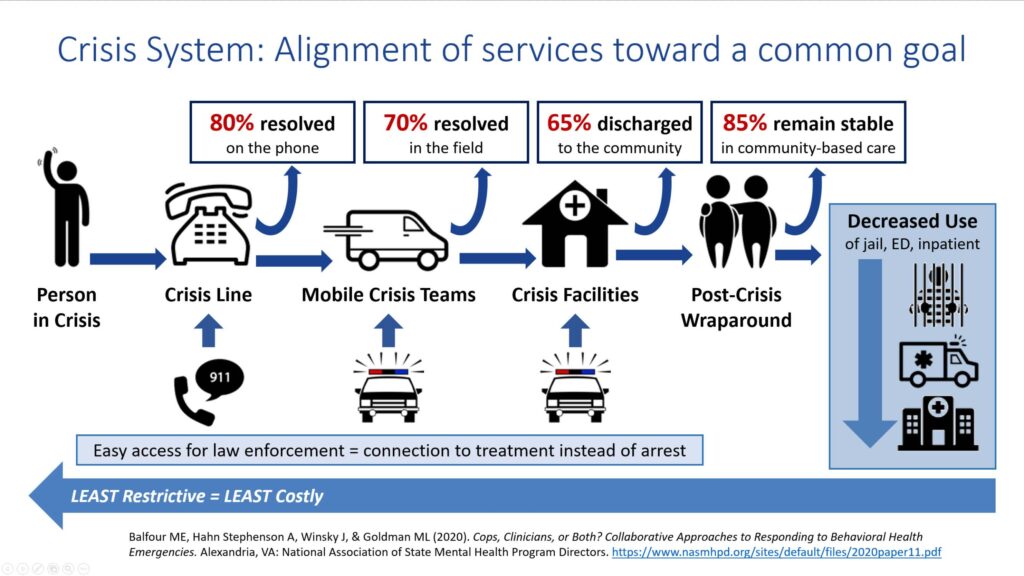
Crisis System: Alignment of services toward a common goal
ALABAMA MEDICAID AGENCY AWARDED MOBILE CRISIS INTERVENTION GRANT Expanding the Alabama Department of Mental Health’s Crisis System of Care MONTGOMERY,
Direct Support Professional Recognition Week September 13-17 Celebrating the Hearts and Souls of Those that Give Greatly   MONTGOMERY, Ala.
SUICIDE PREVENTION AWARENESS WEEK September 5-11 #BeThe1To MONTGOMERY, Ala. – The Alabama Department of Mental Health, its community partners, and
NATIONAL RECOVERY MONTH 2021 Recovery is for Everyone: Every Person, Every Family, Every Community   MONTGOMERY, Ala. – The Alabama
INTERNATIONAL OVERDOSE AWARENESS DAY, AUGUST 31 Prevent, Reduce Stigma, and Remember  MONTGOMERY, Ala. – The Alabama Department of Mental Health
World Autism Day – April 2, Followed by Awareness and Acceptance All Month Long

Montgomery, Ala. – Join the Alabama Department of Mental Health (ADMH) as we celebrate World Autism Day on April 2, followed by Autism Awareness Month. Throughout the month, ADMH and partners will share messages and personal stories of awareness, acceptance, and inclusivity.

We invite you to share in Autism Speaks’ Kindness Campaign, which encourages acceptance and understanding with daily acts of kindness at your school, work, or in your community. Together, we can create a world where all people with autism can reach their full potential.

Many have heard of Autism Spectrum Disorder (ASD), but far too few know what it’s like to have autism – and experience both the strengths and challenges. According to Autism Speaks, ASD refers to a broad range of conditions characterized by challenges with social skills, repetitive behaviors, speech, and nonverbal communication. The Centers for Disease Control state autism affects an estimated one in 54 children in the United States.

Signs of autism usually appear by age two or three. Some associated development delays can appear even earlier, and often, it can be diagnosed as early as 18 months. Over the years, the number of individuals diagnosed with ASD has increased, but research shows that early intervention leads to positive outcomes later in life for people with autism.

The ADMH Office of Autism Services values the uniqueness of all individuals and strives to provide comprehensive supports, serving hundreds of children and youth and their families, throughout all regions of the state. To learn more about the office and services offered, please visit https://mh.alabama.gov/autism-services/.

ADMH leads the Alabama Interagency Autism Coordinating Council (AIACC) which was created to meet the urgent and substantial need to develop and implement a statewide comprehensive, coordinated, multidisciplinary, interagency system of care for individuals with autism spectrum disorder and their families.

The Regional Autism Network (RAN) is supported by the AIACC and consists of five universities which serve as hubs for professional training programs, technical assistance and consultation services, direct assistance, and public education programs. The RAN is staffed by experts in the field of Autism Spectrum Disorder. The RAN networks are housed at Auburn University, University of Alabama, University of Alabama at Birmingham, University of Alabama in Huntsville, and University of South Alabama. Each Regional Autism Network strives to connect people with ASD, their families, educators, and service providers to the information and/or services that best meet their needs.

Many events take place in the month of April to celebrate individuals with ASD, their families and professionals who work in the field. For example, Alabamians will take part in the virtual or community Every Step Matters Walk for Autism in support of the one in 44 individuals affected by autism. Registration is open at www.walkforautismAL.com. Your walk team can be as simple as you registering for a relaxing walk alone in a local park or as involved as a team of 20 from your office wearing super hero costumes.

Since the walk began, the Autism Society of Alabama has raised funds to support communities across the state. Proceeds from the walk provide meaningful programs such as sensory bags for first responders, family camps, and many more programs. Individuals on the spectrum and their families have benefited from the generosity of our many donors and supporters. To learn more about the Autism Society of Alabama, you can visit their website at www.autism-alabama.org.


National Drug and Alcohol Facts Week 2022

NATIONAL DRUG AND ALCOHOL FACTS WEEK

Linking Teens to Facts that SHATTER THE MYTHS® about Drugs and Drug Use


Montgomery, Ala. – The Alabama Department of Mental Health (ADMH) celebrates and supports the annual National Drug and Alcohol Facts Week (NDAFW®), along with the National Institute on Drug Abuse (NIDA) and the National Institute on Alcohol Abuse and Alcoholism (NIAAA). The weeklong observance, held March 21 – March 27, 2022, is designed to bring teens and scientific experts together to discuss the scientific facts about drugs, as well as potential health effects on teen bodies and brains.

During the week, youth around the state participate in programs hosted by community providers to “Shatter the Myths” and counteract the falsehoods about drugs and alcohol teens may receive from the internet, social media, television, movies, music, or from friends. Launched in 2010 by scientists at the NIDA, the week was created to stimulate educational events in communities, so teens can learn what science has taught about drug use and addiction.

“Asking questions about drugs and alcohol can be hard at times, for teens. National Drug and Alcohol Facts Week gives an opportunity to encourage teens to talk in safe spaces and while being involved in fun activities,” said ADMH Prevention Services Director, Beverly Johnson.

ADMH has 23 Certified Prevention Providers that offer prevention activities aligned with the Centers for Substance Abuse and Prevention strategies including Alternative, Community Based Process, Education, Environmental, Information Dissemination, and Problem Identification and Referral. Through these strategies, providers implement and participate in prescription drug takeback events, health fairs, media campaigns, and various other national observance activities.


ADMH’s Office of Prevention will host the following activities during NDAW:

Monday, March 21, 2022

Proclamation Signing

Mind Matters: Drugs on the Brain

https://teens.drugabuse.gov/sites/default/files/NIDA_MindMatters_Drugs_and_Brain.pdf


Tuesday, March 22, 2022

Tobacco Use (Vaping/ E- Cigarettes)

Mind Matters: The Body’s Response to Nicotine, Tobacco and Vaping

https://teens.drugabuse.gov/sites/default/files/MindMatters_Nicotine_2020_508.pdf

https://youtu.be/v_h49yYtvTo


Wednesday, March 23, 2022

Opioids/ Prescription Drugs

Facts Sheet: Mind Matters Opioids

https://teens.drugabuse.gov/sites/default/files/NIDA_MindMatters_Web_Opioids_2019_Final.pdf


Thursday, March 24, 2022

Underage Drinking and Alcohol Misuse

Fatal Vision Goggles Simulation


Friday, March 25, 2022

Coping With Stress: Kahoot! Game (via Zoom 12:30pm)

This activity will help individuals understand how acute stress affects their bodies, how it differs from the more dangerous constant (or chronic) stress and learn strategies to support their mental and emotional health.

Join Zoom Meeting
https://mhalabama.zoom.us/j/89576818695

Meeting ID: 895 7681 8695
To access game:

https://kahoot.it/


The Community Waiver Program Launches: Promoting Independence, Inclusion, and Increased Opportunities

Montgomery, Ala. – The Centers for Medicare and Medicaid Services, the Alabama Medicaid Agency and the Alabama Department of Mental Health (ADMH), Developmental Disabilities (DD) Division have launched a new waiver program in limited areas of the state, with a focus on serving individuals before they and/or their family members are in crisis.

The Community Waiver Program focuses on maintaining family relationships and promoting community inclusion and competitive employment, which are of utmost importance to an individual’s health, well-being and happiness, by providing the needed supports that can enable individuals with developmental disabilities to continue to live with family or in their own homes.

ADMH Commissioner Kimberly Boswell said, “This is a very exciting time for individuals, families, stakeholders, and for the Alabama Department of Mental Health. For many years, we have all worked to make the dream of independence, employment, and full inclusion a reality.”

Boswell continued, “The Community Waiver Program provides the support and structure for us to deliver on the promise of a better life for individuals with intellectual and developmental disabilities. We give special thanks to our staff, Alabama Medicaid, and many partners across the state, for their dedication and hard work.”

In its first year, the Community Program Waiver will serve 500 individuals who will come directly off the waiting list. This will reduce the waiting list by twenty-five percent. Forty-six percent of the individuals on the current waiting list reside in six of the 11 eligible counties: Baldwin, Jefferson, Madison, Mobile, Montgomery, and Tuscaloosa.

The new waiver program will be targeted to serve persons with intellectual disabilities (ID) not currently receiving services through a current Home and Community-Based Services waiver, including persons currently on the waiting list for the existing Intellectual Disabilities or Living at Home waivers.

The Community Waiver Program will be launched in a total of 11 counties: Baldwin, Elmore, Houston, Jefferson, Limestone, Madison, Mobile, Montgomery, Morgan, Tuscaloosa, and Walker.

The Community Waiver Program offers services to persons with intellectual disabilities in five enrollment groups, based on age and relative independence, each with a set of services designed particularly to serve them:

  1. Children (ages 3-13) with intellectual disabilities who live with family or other natural supports
  2. Transition-age youth with intellectual disabilities who (ages 14-22) live with family or other natural supports or who (ages 18-22) live independently
  3. Working age or older adults (ages 22+) with intellectual disabilities who live with family or other natural supports or who live independently
  4. Individuals (ages 3+) with intellectual disabilities who are unable to live with family or other natural supports or to live independently
  5. Individuals with intellectual disabilities, ages 22 and older, who have a minimum of one substantial functional limitation

To learn more about how to enroll on the waiting list, contact the ADMH Call Center at 1-800-361-4491 and visit https://mh.alabama.gov/community-waiver-program/.

Service providers in this new program will focus on goals of Home and Community-Based Services programs such as community integration, opportunities for employment, and developing skills for independence.]

Read the Centers for Medicare and Medicaid Services full release here. Read the details of the waiver here.

About Us: The Alabama Department of Mental Health serves more than 200,000 Alabama citizens with mental illnesses, developmental disabilities, and substance use disorders. Our mission is to Serve, Empower, and Support, and promote the health and well-being of Alabamians. Visit www.mh.alabama.gov for more information.

Governor Ivey Announces the Fourth Mental Health Crisis Center

Governor Ivey Announces the Fourth Mental Health Crisis Center

The Alabama Department of Mental Health Continues Expansion of Crisis Care

MONTGOMERY – Governor Kay Ivey and Commissioner Kimberly Boswell of the Alabama Department of Mental Health are proud to announce the awardee of a fourth crisis center, a vital addition to the Alabama Crisis System of Care. The center will serve individuals with mental illness and substance use disorders, expanding access to care more broadly than ever before. The provider and location of the fiscal year 2022 Crisis Center is Jefferson, Blount, St. Clair (JBS) Mental Health Authority in Birmingham.

“The Ivey Administration is fully committed to addressing the very real challenges in the area of mental health care. This is critical, and should not be overlooked, which is why it remains of high importance in my agenda,” said Governor Ivey. “I am proud to award the JBS Mental Health Authority this fourth crisis center in Birmingham. These centers will go a long way in improving mental health care in Alabama.”

The current Crisis Centers are located at AltaPointe Health in Mobile, WellStone in Huntsville, and the Montgomery Area Mental Health Authority in Montgomery. The state’s first three Crisis Centers were awarded funding in October 2020 and have been operational since May 2021.

Commissioner Boswell said, “Crisis Centers are a crucial element of an integrated system of care. This award demonstrates the commitment of the local community to form and strengthen partnerships. The addition of the fourth Crisis Center, in one of the most populated metropolitan areas in the state, brings vital and necessary crisis services in an expanded and more accessible form.”

Crisis Centers are a designated place for community members, law enforcement, and first responders to take an individual who is in mental health crisis. Crisis Centers offer both walk-in access and the capacity for first responders and law enforcement to transfer individuals to the center for crisis care for a warm hand-off to Crisis Center staff, short-term admission, medication management, and case management. Services also include critical crisis intervention and stabilization services, discharge planning and connections to ongoing behavioral health care services, if needed.

In the 2020 and 2021 legislative sessions, Governor Ivey prioritized establishing a mental health crisis continuum of care, with efforts in the Alabama Legislature led by House Majority Leader Nathaniel Ledbetter. The initial three Crisis Centers were funded with an $18 million appropriation in the FY2021 General Fund budget, with continuation funding secured in the FY2022 General Fund. The fourth Crisis Center is funded through a new budget appropriation of $6 million approved by the Alabama Legislature. All Crisis Center funds were awarded through a Request for Information and competitive Request for Proposal evaluation and selection process.

To learn more, please visit Alabama Department of Mental Health Alabama Crisis System of Care webpage.


###

Press Contact

Gina Maiola, Press Secretary

Office of Governor Kay Ivey

gina.maiola@governor.alabama.gov

600 Dexter Avenue Montgomery, AL 36130 | (334) 242-7150

For more information, visit: http://governor.alabama.gov/.

Governor Ivey Photos | Newsroom


ALABAMA MEDICAID AGENCY AWARDED MOBILE CRISIS INTERVENTION GRANT

ALABAMA MEDICAID AGENCY
AWARDED MOBILE CRISIS INTERVENTION GRANT
Expanding the Alabama Department of Mental Health’s Crisis System of Care

MONTGOMERY, Ala. – The Centers for Medicare & Medicaid Services (CMS) awarded the Alabama Medicaid Agency, along with 19 other State Medicaid Agencies, a planning grant funded through the American Rescue Plan Act (ARP) to develop and implement community-based mobile crisis intervention services for people experiencing a substance use-related or mental health crisis. Alabama was awarded $953,336.00 for use over a twelve-month period effective September 30, 2021, through September 29, 2022. This award will benefit the Alabama Department of Mental Health’s Crisis System of Care.

Commissioner Stephanie Azar said, “Alabama Medicaid is happy to partner with the Department of Mental Health on this initiative to plan for emergency behavioral health services with increased access to care and resources in our state.”

“We are excited to receive the CMS State Planning Grant and grateful to partner with Alabama Medicaid. This grant is critical to expanding crisis services and access to care, particularly in our rural communities,” said Alabama Department of Mental Health Commissioner Kim Boswell.

With the support of this highly competitive CMS State Planning Grant, Alabama will coordinate longstanding efforts to expand access to robust and timely crisis behavioral health services. Crisis services which include evidence-based best practices found in SAMHSA’s “National Guidelines for Behavioral Health Crisis Care” will be used in preparation for developing and submitting to CMS, a State Plan Amendment (SPA), section 1115 demonstration application, or section 1915(b) or 1915(c) waiver request to provide qualifying community-based mobile crisis intervention services.

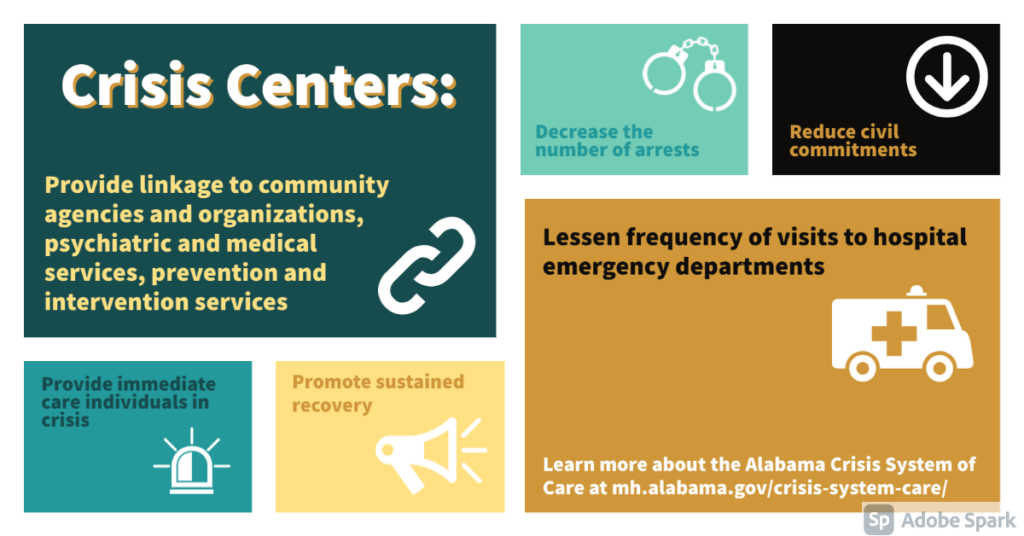
The grant allows for the continued planning and expansion of the Alabama Crisis System of Care. This system overseen by the Alabama Department of Mental Health diverts more individuals from civil commitments, expands access to care, reduces the number of arrests, decreases the frequency of admissions to hospital emergency departments, and promotes sustained recovery.

###

2021 Direct Support Professional Recognition Week

Direct Support Professional Recognition Week
September 13-17
Celebrating the Hearts and Souls of Those that Give Greatly


MONTGOMERY, Ala. – The Alabama Department of Mental Health is recognizing the important role direct support professionals (DSP) play in supporting individuals with intellectual, developmental, and physical disabilities, by highlighting September 13-17, 2021, as Direct Support Professional Recognition Week. The annual celebration provides an opportunity to say “thank you” to the direct support workforce that serves more than 6,100 Alabamians.

To support and acknowledge Alabama DSPs and the often unsung work of these dedicated professionals, the Alabama Department of Mental Health will share stories, information, and resources on social media, to raise awareness about the role and importance of DSPs.

Danielle Smith, a direct support professional at the Centers for the Developmentally Disabled in Decatur said, “A lot of our clients do not have families of their own and we become family to them. For those that do have family, we are able to provide comfort knowing that their loved one is being cared for and loved. I always knew that I wanted to care for others. I took care of my mother after she got sick and seeing the joy that it brought her, and to my father; it meant the world to me.”

“My favorite thing about being a DSP are the breakthrough moments that we get to have with our clients, especially when some of our nonverbal clients build that trust with us and are able to laugh with us – it makes me feel good to make others feel good,” Smith continued.

The unfailing dedication of a direct support professional doesn’t go unnoticed, as their work shows devotion to ensuring the quality of life for individuals they serve. At WellStone in Huntsville, nearly 45 direct support professionals are employed as mental health techs, behavioral aides, and residential aides. Some of their daily responsibilities may include teaching clients coping skills, providing instruction, guidance, and encouragement, and preparing nutritious meals with them.

“Their commitment, compassion, and unique abilities are why we continue to grow and increase the number of recurring clients each year.,” explained Jeremy Blair, Executive Director, WellStone. “Our DSPs show up every day to enhance the lives of others and ensure that our clients are receiving the best care and treatment possible.”

Blair added, “We are very fortunate to have a team that radiates the dedication necessary to bring hope and perseverance to individuals who need it most in their recovery journeys.”

To learn more about the vital work performed by DSPs and how to receive services for individuals in need of care, visit www.mh.alabama.gov.

###


Suicide Prevention Awareness Week 2021

SUICIDE PREVENTION AWARENESS WEEK

September 5-11

#BeThe1To

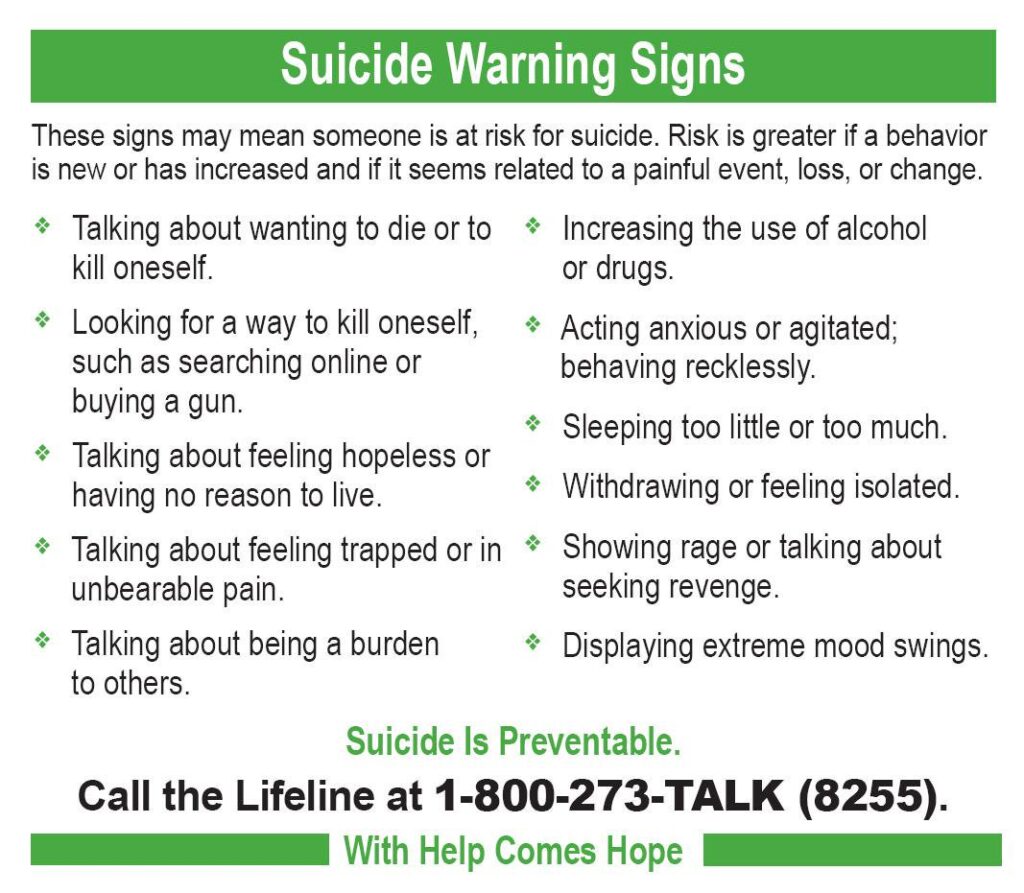
MONTGOMERY, Ala. – The Alabama Department of Mental Health, its community partners, and other mental health organizations join forces to recognize September as Suicide Prevention Awareness Month. This year’s theme, #BeThe1To is the National Suicide Prevention Lifeline’s message, which helps educate about what we can all do to prevent suicide. In addition to National Suicide Prevention Week, the entire month is celebrated and also highlights World Suicide Prevention Day (September 10th).

“During this month, we pause to remember those we have lost to suicide and encourage survivors of suicide, survivors of suicide attempts, and individuals who have triumphed over mental illness to spread the awareness of suicide prevention. Together we can help prevent suicide,” said Beverly Johnson, ADMH Prevention Services Director.

In almost all cases, suicide can be traced to unrecognized, or untreated mental health, or a result from a variety of risk factors and personal conditions that combine to make a person feel hopeless. Suicide can happen to a person regardless of any sex, race, ethnicity, or economic status.

A recent report from the Centers for Disease Control and Prevention (CDC) revealed suicide rates increased 33 percent between 1999 and 2019 – and suicide has become the 10th leading cause of death among young (10-34) Americans. The 2019 suicide rate in Alabama was 16.4 per 100,000, which is higher than the 2018 U.S. rate of 14.5 per 100,000.

“We know that one death by suicide is too many and early recognition of warning signs and early intervention can save lives,” Johnson continued.

Help is available, and you do not have to suffer emotional or psychological pain alone. Learn how to help and obtain resources at https://afsp.org/take-action/. For free confidential support 24/7, please call the National Suicide Prevention Lifeline by phone 1-800-273-TALK (8255) or online chat http://www.suicidepreventionlifeline.org.

The NAMI Crisis Text Line also provides support for people or your loved ones in distress 24/7, text HOME to 741741 from anywhere in the U.S. or visit online at https://www.crisistextline.org.

For more information on Suicide Prevention programs at the ADMH, please contact Maegan Ford at 334-353-7506.

National Recovery Month 2021

NATIONAL RECOVERY MONTH 2021

Recovery is for Everyone: Every Person, Every Family, Every Community

 
MONTGOMERY, Ala. – The Alabama Department of Mental Health (ADMH) recognizes September as National Recovery Month, a national observance held to educate individuals and families that substance use treatment and mental health services are available, assist with recovery and help to promote healthy and rewarding lifestyles. This year’s theme, “Recovery is for Everyone: Every Person, Every Family, Every Community.”

During this month, ADMH celebrates individuals in recovery and recognizes the dedicated professionals who provide the prevention, treatment, and recovery support services. To find a substance use disorder provider in your area, click here.

The ADMH welcomes everyone to recovery by decreasing barriers to recovery support, creating inclusive spaces and programs, and broadening the understanding of what recovery means for people with different experiences. Recovery Month works to inspire people across the country to transform the “I” into “we” and build bridges between families, communities, and groups. Mental health and substance use disorder are not one-size-fit all conditions, nor do they affect everyone equally.

 Recovery Month celebrates the gains made by those living in recovery, like Aubin Cawthon, a R.O.S.S. Outreach Specialist in Madison County!

 “My name is Aubin Cawthon, and I am a person in long term recovery. For me that means I have not found it necessary to use substances since September 2016. For seventeen years I struggled in active use. The first time I used I was 13 years old, and by 16, I found myself in treatment for the first time. In three short years it was clear that I reacted differently to substances. My dad found me passed out on the porch with bruises and a black eye, and once again I couldn’t remember what had happened. I have been to treatment six times and once to an inpatient mental health facility.

 I have been misdiagnosed and overmedicated. I have struggled with self-harm, contemplated suicide, and made several attempts. In September 2016, after many failed attempts at complete abstinence, I decided to try Medicated Assisted Treatment (MAT). Once I began MAT, I worked on finding support to help me walk through recovery. I connected with people in a twelve-step program and started meeting supportive people around my community.

 Over the course of that first year, and with the help of my newfound support system, I decided to try complete abstinence again. In November 2017, I finished my MAT program and began my journey with complete abstinence. In the past four years I have worked on my mental, emotional, and physical self. As a result of that work, I have become a productive member of the community.

In my personal life I have built healthy friendships with amazing people, and maintained a healthy relationship, I’ve learned how to be a responsible adult with integrity. In addition, I’ve bought a home, and participated in the growth of my community and I’ve even had the opportunity to travel and see new places. I get to be a supportive and loving person instead of a destructive and angry one. In my professional life, I have learned a strong work ethic and had the opportunity to work with many community-based organizations assisting the underserved members of the community.

 In December 2020, I received my Recovery Support Specialist certification and began working with R.O.S.S. Over the last nine months I have worked closely with members in the community struggling with substance use disorders and broadened the scope of outreach in the community. Recovery, for me, looks like the ability to walk with my head held high and my voice be heard. I spent too many years not knowing who I was or where I fit into this world and recovery has given me the opportunity to find my place in life and live it to its fullest.”

Now in its 32nd year, Recovery Month celebrates the gains made by those in recovery. reminds people in recovery and those who support them, that recovery belongs to all of us. While every journey may look different, we are all in this together.

‘Please join ADMH and community partners as we celebrate recovery and deepen our understanding of substance use disorder. Visit the ADMH Facebook page to check out local featured events or search for national events here, at the Recovery Month calendar of events.


###

Overdose Awareness Day 2021

INTERNATIONAL OVERDOSE AWARENESS DAY, AUGUST 31

Prevent, Reduce Stigma, and Remember

 MONTGOMERY, Ala. – The Alabama Department of Mental Health pauses to commemorate August 31st  as International Overdose Awareness Day (IOAD), a global event to remember those who have died from a drug overdose.

Every 12 minutes, someone dies from an opioid-related overdose. Ninety percent of opioid overdoses are accidental. One in four people has been directly impacted by the opioid crisis; either they know someone with an opioid use disorder, know someone who has died from an overdose or they have an opioid use disorder themselves.

According to data released from the Centers for Disease Control and Prevention, drug overdose deaths were up 35 percent in Alabama in 2020 compared to 2019. Alabama is not alone; the national average saw an increase of 30.9 percent. With the issue of addiction already having existed prior to the pandemic, the stress of the pandemic may have influenced higher rates of substance abuse in communities statewide and nationally.

Developing an opioid use disorder is not a choice someone makes, nor is it a moral failing. It’s a long-term relapsing brain disease that is characterized by compulsive drug-seeking and use despite harmful consequences. People who take opioid pain relievers for too long or in doses too large are more at risk of developing an opioid use disorder and more likely to die of a drug overdose. Additionally, people with an opioid use disorder often encounter stigma, causing feelings of shame, isolation, and fear, which prevents them from seeking help early on.

IOAD day serves as a day to raise awareness not only about drug and substance abuse issues, but is also aimed at educating community members of resources to battle both addiction and overdose throughout the year. To recognize the national event, mental health, substance use disorder groups across the state are holding numerous events to remember lives lost, celebrate the survivors of overdose, and empower others to seek the help they may need.

What can you do for yourself or for loved ones?


What can you do to honor this day?

  • Offer an educational program, such as one related to preventing opioid use, in partnership with a local organization
  • Provide a safe space for telling the stories of overdose victims
  • Add the name of a loved one who died of an opioid overdose to the Celebrating LostLoved Ones map
  • Research state and federal legislation that addresses opioid overdose prevention, and write to your representative

Call the Alabama Department of Mental Health at 334-242-3962 or visit https://mh.alabama.gov/prevention/ and https://mh.alabama.gov/division-of-mental-health-substance-abuse-services/substance-abuse-treatment-services/ to find addiction treatment services and linkage to community-based overdose prevention resources available.

###